CLM Meaning: E-Signature Software Solution and RightSignature With Fortva
Contract Lifecycle Management (CLM) is the end-to-end process of managing contracts from creation, negotiation, and approval through signing, storage, compliance, and renewal within a centralized system.
At first, platforms like RightSignature solve a major operational problem by making it easier to send, sign, and finalize agreements digitally. But many organizations eventually realize that signing a contract is only one small part of the contract lifecycle. The real challenge begins before and after the signature.
Contracts still move through scattered email threads, disconnected folders, manual approvals, outdated spreadsheets, and inconsistent compliance processes. Teams may complete signatures quickly, yet still struggle with missing renewal dates, poor version control, weak audit trails, and lost visibility into contract obligations. That is where Fortva changes the equation.
Key Takeaways
- Contract Lifecycle Management (CLM) helps small businesses organize, automate, and manage contracts from creation to renewal in one centralized system.
- Manual contract processes using emails, spreadsheets, and shared drives often lead to delays, lost documents, compliance risks, and missed renewal opportunities.
- CLM software improves efficiency by automating approvals, document routing, renewal tracking, and contract storage.
- Small businesses can create contracts faster using reusable templates, workflow automation, and AI-powered document management tools.
- Centralized contract repositories help businesses quickly search, retrieve, and manage agreements without wasting time across disconnected systems.
- E-signature integrations with tools like DocuSign help businesses finalize agreements faster while maintaining secure and compliant workflows.
- AI-powered CLM platforms like Fortva transform contracts into searchable business intelligence by extracting key dates, obligations, and compliance data automatically.
- Secure cloud-based contract management improves collaboration between legal, sales, HR, procurement, and finance teams while maintaining audit-ready records.
- CLM reduces administrative workload, allowing small businesses to focus more on growth, customer relationships, and operations instead of manual paperwork.
- As businesses scale, CLM software provides the structure, visibility, and automation needed to manage increasing contract volumes efficiently and securely.
Why Standalone E-Signature Tools Are No Longer Enough
Electronic signatures have become standard across industries, especially in legal operations, HR onboarding, procurement, financial services, healthcare, and enterprise sales. However, signing speed alone does not solve broader contract management challenges.
In many organizations, the workflow still looks fragmented: Contracts are drafted in Microsoft Word or stored across shared drives. Teams review versions through endless email chains. Stakeholders manually approve documents without structured workflows. After signing, executed agreements are uploaded into folders with inconsistent naming conventions and limited searchability.
The result is operational chaos disguised as digital efficiency. Research from World Commerce & Contracting shows that poor contract management practices contribute to an average of 9% annual revenue leakage due to missed obligations, weak visibility, compliance failures, and renewal oversights. That means organizations may lose millions annually simply because contracts are not managed properly after execution.
A separate report from Gartner found that organizations without automated contract workflows experience approval and execution cycles that are up to 50% slower than businesses using integrated CLM systems. Delays in legal review, approvals, and document routing create operational bottlenecks that directly affect revenue and productivity.
The issue is no longer whether companies can collect signatures digitally. The real issue is whether organizations can manage the full lifecycle surrounding those agreements.
What RightSignature Does Well
RightSignature remains a recognized electronic signature platform because it simplifies document execution. Businesses use it to reduce paper-based processes and accelerate approvals across departments.
The platform is particularly useful for organizations looking for a fast and easy way to collect legally binding signatures online. Sales teams use it to close agreements faster. HR departments use it for onboarding documentation. Legal and procurement teams use it to finalize contracts remotely.
Its strengths include a user-friendly signing process, digital signature capture, basic workflow automation, and integrations with commonly used business tools.
For many businesses, RightSignature successfully addresses the “last mile” of contract execution. However, enterprise contract management requires more than signature collection.
Where Traditional E-Signature Workflows Break Down
As organizations scale, contracts become more complex and involve multiple stakeholders across departments. At that stage, companies require more than document execution—they require governance, intelligence, automation, and lifecycle visibility. Standalone e-signature tools typically lack:
- Centralized contract repositories
- AI-powered contract analysis
- Structured approval workflows
- Intelligent OCR extraction
- Renewal and obligation tracking
- Cross-department collaboration controls
- Audit-ready compliance histories
- Enterprise-grade lifecycle automation
According to Deloitte, legal departments spend nearly half of their time on administrative contract-related tasks instead of higher-value strategic legal work. Manual approvals, document retrieval, and compliance monitoring consume resources that could otherwise support business growth and risk management.
This operational inefficiency becomes even more expensive for enterprises managing thousands of contracts across procurement, sales, HR, vendor management, and client services.
Benefits of E-Signatures for Modern Businesses
Electronic signatures have transformed how businesses approve, manage, and execute agreements. Instead of relying on printing, scanning, mailing, or in-person signing, organizations can now complete contracts securely from anywhere in minutes.
As remote work, digital operations, and global business transactions continue to grow, e-signatures have become essential for improving speed, efficiency, and customer experience.
Platforms like Fortva combine e-signature integrations with AI-powered contract lifecycle management, helping businesses not only sign agreements faster but also automate approvals, centralize contracts, and manage the full document lifecycle securely. Here are some of the biggest benefits of e-signatures for businesses.
1. Faster Contract Turnaround
Traditional signing processes often create unnecessary delays. Documents must be printed, physically signed, scanned, emailed back, or shipped between parties.
E-signatures eliminate those steps completely.
Businesses can send agreements instantly and receive signed documents within minutes instead of days or weeks. Faster turnaround helps organizations close deals quicker, onboard clients faster, and accelerate internal approvals.
For sales teams, this can directly improve revenue cycles and customer conversion speed.
2. Improved Convenience for Clients and Teams
One of the biggest advantages of e-signatures is convenience.
People can sign documents from anywhere using laptops, tablets, or mobile devices without visiting offices or handling physical paperwork. This flexibility is especially important for remote teams, distributed workforces, and global business operations.
E-signatures make the signing process easier for customers, vendors, employees, and business partners, improving the overall experience.
3. Reduced Paperwork and Printing Costs
Paper-based contract processes generate significant operational expenses over time.
Businesses spend money on printing, scanning, postage, document storage, and administrative handling. E-signatures help eliminate those costs by digitizing the entire execution process.
Organizations also reduce paper waste, making operations more environmentally friendly and sustainable.
4. Better Document Security
Physical documents can be lost, stolen, damaged, or accessed by unauthorized individuals.
Modern e-signature platforms provide stronger security protections through encryption, authentication, audit trails, and controlled access permissions.
When combined with secure document management systems like Fortva, signed agreements are stored inside centralized repositories protected with enterprise-grade security and military-grade zero-knowledge encryption.
This helps businesses protect sensitive contracts, client records, financial agreements, and legal documents.
5. Stronger Audit Trails and Compliance
Tracking paper-based approvals is often difficult and unreliable.
E-signature systems automatically create detailed audit trails showing who signed a document, when it was signed, and how the process occurred. This improves transparency and helps businesses maintain compliance requirements.
Audit-ready records become especially important for industries handling regulatory oversight, legal agreements, procurement contracts, HR onboarding, healthcare documentation, and financial services.
6. Faster Approval Workflows
E-signatures work best when combined with workflow automation. Instead of manually emailing documents back and forth, businesses can automate approval routing and send contracts directly to the right stakeholders for review and signature.
Fortva integrates e-signatures into a full contract lifecycle workflow, helping organizations automate approvals, manage redlining, track versions, and centralize signed agreements in one secure platform. This reduces bottlenecks and improves operational efficiency.
7. Improved Customer Experience
Slow paperwork can frustrate clients and delay important business relationships. Modern customers expect fast and seamless digital experiences. E-signatures make it easier for customers to review and approve agreements quickly from any location.
A smoother signing process improves professionalism, customer satisfaction, and trust while reducing friction during onboarding and sales processes.
8. Better Organization of Signed Documents
Many businesses still struggle with storing signed contracts properly after execution. Documents often end up scattered across inboxes, shared folders, or disconnected storage systems. This creates problems when businesses need to retrieve agreements later.
Integrated e-signature and CLM platforms solve this by automatically storing executed agreements inside centralized repositories where they remain searchable, organized, and audit-ready. Fortva helps businesses centralize signed contracts alongside approvals, client documents, workflows, and compliance records.
9. Increased Productivity
Administrative paperwork consumes valuable employee time. Manually printing, scanning, filing, mailing, and following up on signatures slows productivity across departments.
E-signatures automate much of that work, allowing teams to focus on higher-value tasks instead of repetitive document handling.
Legal teams, HR departments, procurement staff, sales organizations, and finance teams all benefit from faster and more efficient document execution.
10. Supports Remote and Global Business Operations
Modern businesses increasingly operate across multiple locations and time zones.
E-signatures allow organizations to complete agreements securely without requiring physical meetings or courier services. Contracts can be signed instantly between clients, vendors, employees, and partners regardless of geographic location.
This flexibility is critical for remote work environments and international business operations.
11. Legally Binding and Widely Accepted
E-signatures are legally recognized in many countries and industries when properly implemented according to applicable laws and regulations.
Businesses can confidently execute agreements electronically while maintaining enforceability and compliance standards. This has made e-signatures a trusted standard for modern contract execution.
How Fortva Transforms E-Signature Workflows
Fortva extends the value of e-signature tools by surrounding them with a fully governed contract lifecycle management ecosystem. Instead of contracts living in disconnected systems, Fortva centralizes the entire process into one secure cloud-based platform.
Organizations can create agreements using Fortva’s built-in free contract templates or upload their own custom documents directly into the system. Teams collaborate inside a structured environment with version control, redlining, role-based permissions, and approval routing.
Once internal reviews are completed, contracts can be sent for signature through integrated e-signature workflows, including DocuSign integrations. After execution, signed agreements automatically return to Fortva’s secure repository where AI and intelligent OCR technology extract key data points such as renewal dates, obligations, financial terms, compliance clauses, and deadlines.
This turns static documents into searchable, actionable business intelligence. Instead of manually tracking contracts in spreadsheets, organizations gain automated visibility across the entire lifecycle.
The Power of AI-Driven Contract Intelligence
Modern enterprises are moving beyond simple document storage. They want systems capable of understanding and analyzing contract data automatically.
Fortva uses AI-powered extraction and intelligent OCR to convert contracts into structured operational insights. Rather than storing agreements as inactive PDFs, the platform identifies critical information and automates workflows around it. This includes:
- Renewal and expiration monitoring
- Compliance tracking
- Obligation management
- Approval workflows
- Contract analytics
- Audit trail documentation
- Version history visibility
According to IDC, more than 60% of organizations are now prioritizing contract intelligence and workflow automation over standalone e-signature capabilities. Businesses increasingly recognize that operational efficiency depends on lifecycle visibility, not just faster signing.
This shift is especially important for enterprises handling sensitive client records, vendor agreements, legal documentation, procurement contracts, or regulatory compliance requirements.
Why Centralized Contract Management Matters
One of the biggest risks businesses face is fragmented contract storage. When contracts are spread across inboxes, local drives, cloud folders, and disconnected systems, organizations lose visibility into critical business commitments. Teams waste valuable time searching for agreements, verifying versions, or confirming approval status.
Research from McKinsey & Company shows that digitized contract workflows can reduce contract cycle times by up to 70% in complex organizations. Faster workflows improve operational efficiency while reducing administrative burden and compliance exposure.
Fortva centralizes everything into one secure environment protected with enterprise-grade security and military-grade zero-knowledge encryption. Teams can control permissions, collaborate securely, automate approvals, and maintain a single source of truth across departments.
This becomes particularly valuable for industries managing high document volumes, including legal services, healthcare, finance, consulting, government contractors, procurement teams, HR departments, and enterprise sales organizations.
Fortva Delivers More Than Document Storage
Traditional document management systems focus mainly on storage and sharing. Fortva goes much further by combining:
- AI-powered document management
- Contract lifecycle management (CLM)
- Workflow automation
- Intelligent OCR extraction
- Version control and redlining
- Team collaboration tools
- Secure client and advisor portals
- Automated approval routing
- Enterprise searchability
- Role-based permissions
- E-signature integrations
- Audit-ready compliance tracking
Because Fortva integrates with platforms like Microsoft Word, Salesforce, HubSpot, Zapier, and DocuSign, businesses can connect contracts directly to customer lifecycle workflows, sales operations, procurement systems, and compliance processes. This creates operational continuity instead of disconnected workflows.
What Is Contract Lifecycle Management?
Contracts drive almost every business relationship. Whether a company is onboarding employees, managing vendors, closing sales deals, handling procurement, or negotiating partnerships, contracts sit at the center of operations. Yet many businesses still manage agreements through scattered emails, spreadsheets, shared drives, and disconnected approval processes.
That approach creates delays, compliance risks, missed renewals, and lost revenue. This is where Contract Lifecycle Management (CLM) becomes critical.
CLM meaning refers to the process of managing contracts from creation and negotiation through execution, storage, compliance tracking, renewals, and expiration. Instead of treating contracts as static files, CLM transforms them into structured business assets that can be automated, monitored, analyzed, and optimized throughout their entire lifecycle.
Modern businesses are increasingly replacing manual contract processes with intelligent platforms like Fortva, a cloud-based AI-powered document management and contract lifecycle management software built to centralize contracts, automate workflows, improve compliance, and accelerate business operations.
What Does CLM Mean?
CLM stands for Contract Lifecycle Management. It refers to the systems, processes, and technologies businesses use to manage contracts from beginning to end. A complete CLM process covers everything from drafting and approvals to e-signatures, storage, compliance management, reporting, renewals, and audits.
The “lifecycle” part is important because contracts are not one-time documents. They evolve over time and affect multiple departments across an organization. A single contract may involve:
- Legal review
- Procurement approvals
- Finance validation
- Sales negotiations
- Compliance oversight
- Vendor management
- Client onboarding
- Renewal tracking
Without a centralized CLM system, these processes often become fragmented and difficult to control.
Why Contract Management Is Becoming a Major Business Priority
Businesses today manage far more contracts than ever before. Remote work, digital operations, vendor ecosystems, regulatory requirements, and global business relationships have dramatically increased contract complexity.
According to World Commerce & Contracting, organizations lose an average of 9% of annual revenue because of poor contract management practices. Missed obligations, weak visibility, renewal failures, and compliance issues contribute heavily to those losses.
At the same time, contract volumes continue to rise across industries. Research from McKinsey & Company shows that companies implementing digitized contract workflows can reduce contract cycle times by up to 70%, significantly improving operational efficiency and decision-making.
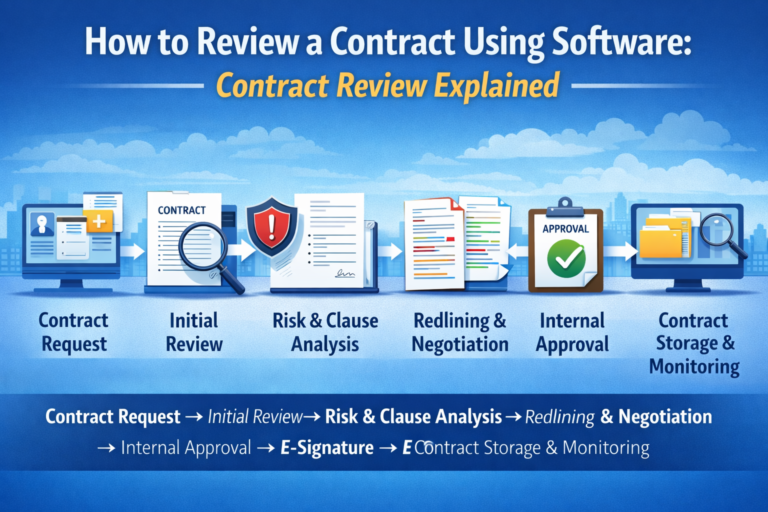
The Six Core Stages of Contract Lifecycle Management
Every contract moves through a series of stages. A modern CLM platform helps automate and manage each phase efficiently.
1. Contract Creation
The lifecycle begins when a business creates a contract. In many organizations, drafting still happens manually using outdated templates stored across shared folders. This often leads to inconsistent language, legal risk, and time-consuming revisions.
Modern CLM platforms like Fortva streamline contract creation by providing built-in templates, automated document generation, clause libraries, and centralized drafting environments. Teams can also upload their own custom agreements and standardize workflows across departments. This reduces drafting errors and accelerates turnaround times.
2. Contract Collaboration and Negotiation
Once a draft is created, stakeholders typically review and negotiate terms. Traditional negotiation processes often involve endless email attachments, confusing version histories, and untracked edits. This creates visibility problems and increases the risk of approving incorrect versions.
CLM software solves this through centralized collaboration tools, version control, redlining, commenting, and permission-based access.
Fortva enables legal, procurement, finance, HR, and sales teams to collaborate inside one secure environment while maintaining full audit visibility over every change made to a contract.
3. Approval Workflows
Approvals are one of the biggest causes of contract delays. Contracts frequently stall because businesses rely on manual follow-ups, email approvals, or disconnected communication channels.
According to Gartner, organizations without workflow automation experience significantly longer approval and execution cycles than businesses using automated CLM systems.
Fortva automates approval routing by directing contracts to the right stakeholders based on predefined workflows. Legal, finance, procurement, or executive teams receive automated notifications, reducing bottlenecks and improving accountability.
4. E-Signature and Execution
After approvals are completed, contracts move to execution. Electronic signatures have become standard across industries because they reduce delays and eliminate paper-based processes.
However, e-signatures alone are not enough. Many businesses use standalone signing tools without managing what happens before or after execution. This creates disconnected workflows and weak contract governance.
Fortva integrates with platforms like DocuSign to combine e-signatures with full lifecycle management. Once signed, contracts automatically return into Fortva’s secure repository without requiring manual uploads or disconnected storage systems. This creates continuity across the entire contract process.
5. Contract Storage and Compliance Management
After execution, contracts must remain searchable, secure, and audit-ready. This stage is where many organizations struggle most.
Contracts are often buried inside shared drives, personal folders, or email inboxes, making it difficult to retrieve documents quickly or monitor obligations effectively.
Fortva centralizes executed agreements into a secure cloud-based repository protected by military-grade zero-knowledge encryption. Businesses can organize documents, manage permissions, track compliance requirements, and maintain complete audit histories from one platform. This improves governance while reducing operational risk.
6. Renewal, Analytics, and Reporting
The final stage of CLM focuses on long-term contract performance. Businesses need visibility into renewal dates, obligations, financial commitments, vendor performance, and compliance milestones.
Without automation, organizations often rely on spreadsheets or manual reminders, which increases the likelihood of missed renewals or overlooked obligations.
Fortva uses AI-powered contract intelligence and intelligent OCR to extract critical contract data automatically. Instead of treating agreements as static PDFs, the platform converts contracts into actionable operational insights. Teams can monitor:
- Renewal deadlines
- Contract obligations
- Payment terms
- Compliance requirements
- Vendor commitments
- Expiration timelines
- Risk indicators
This transforms contracts into strategic business intelligence.
The Difference Between Basic Document Storage and True CLM
Many businesses mistakenly believe cloud storage platforms alone qualify as contract management systems. Storing files digitally is not the same as managing the full contract lifecycle. Basic storage systems lack:
- Workflow automation
- AI-powered extraction
- Approval routing
- Contract intelligence
- Version control
- Audit trails
- Renewal monitoring
- Compliance automation
True CLM platforms combine document management, automation, collaboration, governance, and analytics into one connected ecosystem. That is why organizations increasingly adopt solutions like Fortva instead of relying on disconnected folders and standalone tools.
How AI Is Changing Contract Lifecycle Management
Artificial intelligence is rapidly transforming the CLM industry. Traditional contract review processes require legal teams to manually search documents for key clauses, obligations, deadlines, and risks. This consumes significant time and resources.
According to Deloitte, legal departments spend nearly 50% of their time on administrative contract tasks instead of strategic legal work.
AI-powered CLM platforms help reduce that burden. Fortva uses intelligent OCR and AI-driven extraction to automatically identify and organize key contract data. Businesses can quickly search agreements, analyze terms, detect obligations, and automate workflows based on contract content.
Industries That Benefit Most From CLM Software
Contract lifecycle management is valuable across nearly every industry, especially organizations handling high volumes of agreements. Industries that benefit significantly include:
- Legal services
- Healthcare
- Financial services
- Insurance
- Procurement and supply chain
- Government contractors
- Real estate
- Human resources
- Enterprise sales
- Consulting firms
- Technology companies
Why Businesses Choose Fortva for CLM
Fortva combines AI-powered document management with enterprise contract lifecycle automation inside one secure cloud platform. Businesses use Fortva to:
- Centralize contracts and enterprise documents
- Automate approval workflows
- Manage e-signatures through DocuSign integrations
- Control permissions and collaboration
- Enable redlining and version control
- Extract contract intelligence with AI
- Monitor renewals and obligations
- Improve audit readiness
- Secure sensitive documents with enterprise encryption
- Connect workflows with Salesforce, HubSpot, Zapier, and Microsoft Word
Fortva also provides built-in free contract templates that help businesses draft agreements faster while maintaining consistency across teams. Instead of managing contracts through disconnected systems, organizations gain one centralized operational environment.
Benefits of CLM for Small Businesses
For small businesses, managing contracts manually may seem manageable in the beginning. Many startups and growing companies rely on email threads, spreadsheets, shared drives, or paper documents to track agreements. But as the business grows, contracts quickly become difficult to organize, monitor, and control.
Missed renewal dates, unsigned agreements, lost documents, approval delays, and compliance risks can slow operations and create unnecessary financial exposure.
That is why more small businesses are adopting Contract Lifecycle Management (CLM) software like Fortva to automate workflows, centralize documents, and improve operational efficiency without building large legal or administrative teams. Here are some of the biggest benefits of CLM for small businesses.
1. Faster Contract Creation
Small businesses often operate with limited staff and tight deadlines. Creating contracts from scratch every time wastes valuable hours and increases the risk of inconsistent terms.
CLM software simplifies the drafting process by providing reusable templates, clause libraries, and automated document generation. Fortva includes built-in free contract templates that businesses can customize or upload based on their needs. This helps teams create professional agreements faster while reducing manual work.
2. Better Organization of Business Documents
As businesses grow, contracts become scattered across inboxes, laptops, shared folders, and cloud drives. Finding the latest version of an agreement can become frustrating and time-consuming.
A centralized CLM platform keeps all contracts and related documents in one secure location. Teams can search, retrieve, and manage agreements instantly without digging through multiple systems.
Fortva centralizes contracts, client records, enterprise documents, and approvals into one cloud-based environment, helping businesses stay organized as they scale.
3. Reduced Risk of Missed Renewals
One of the most common problems small businesses face is forgetting important contract dates. Missed renewals can lead to lost revenue, unexpected auto-renewals, vendor disputes, or expired agreements with clients and suppliers.
CLM software automatically tracks deadlines, renewal dates, obligations, and expiration timelines. Businesses receive alerts before critical dates arrive, reducing costly oversights. This gives small businesses greater control over ongoing commitments and financial planning.
4. Improved Collaboration Across Teams
Even smaller companies often involve multiple people in contract approvals, including owners, finance managers, sales teams, HR staff, or external advisors.
Without structured collaboration, contracts get delayed through endless email chains and confusing document versions. CLM platforms improve collaboration through centralized review environments, version control, redlining, and permission-based access. Everyone works from the same document while maintaining visibility into edits and approvals. Fortva helps teams collaborate securely while keeping a complete audit history of every change made to a contract.
5. Faster Approval Processes
Manual approvals slow down business operations. Many small businesses still chase signatures and approvals through email messages, phone calls, or physical paperwork. This creates unnecessary delays that affect sales, onboarding, procurement, and vendor management.
CLM software automates approval workflows by routing contracts to the right people automatically. Fortva helps businesses speed up internal approvals while maintaining governance and accountability across the organization.
6. Secure E-Signature Integration
Modern businesses need fast and secure ways to finalize agreements remotely. Instead of printing, scanning, or mailing contracts, CLM systems integrate with e-signature tools to simplify execution.
Fortva integrates with DocuSign, allowing businesses to send agreements for electronic signature directly from the platform. Once signed, contracts automatically return into the centralized repository without requiring manual uploads.
7. Stronger Security and Access Control
Small businesses increasingly handle sensitive client information, vendor contracts, employee records, and financial agreements digitally. Poor document security can expose businesses to data breaches and compliance risks.
A secure CLM system provides role-based permissions, encrypted storage, audit trails, and controlled access to sensitive information.
Fortva uses enterprise-grade security and military-grade zero-knowledge encryption to help businesses protect confidential documents while maintaining compliance standards.
8. Reduced Administrative Work
Many small business owners spend too much time handling repetitive contract tasks manually. Searching for agreements, updating spreadsheets, following up on approvals, organizing folders, and tracking renewals consume hours that could be spent growing the business.
CLM software automates these administrative processes, reducing operational burden and improving productivity. With AI-powered automation and intelligent OCR, Fortva extracts important contract data automatically, helping businesses work more efficiently without increasing headcount.
9. Better Compliance and Audit Readiness
Regulatory requirements continue to increase across industries, even for smaller companies. Businesses must maintain accurate records, track approvals, store signed agreements securely, and demonstrate compliance when necessary.
CLM systems help businesses maintain audit-ready documentation by automatically recording every action taken throughout the contract lifecycle.
Fortva creates transparent audit trails for drafting, editing, approvals, signatures, and document access, helping businesses stay compliant and prepared for reviews or disputes.
10. Scalable Growth Without Operational Chaos
Many small businesses eventually outgrow manual processes. What works for ten contracts a month becomes unsustainable when managing hundreds of agreements across clients, vendors, employees, and partners.
CLM software provides the operational structure businesses need to scale efficiently without losing visibility or control. Fortva helps growing businesses standardize workflows, automate repetitive tasks, centralize operations, and maintain consistency as contract volumes increase.
11. Improved Client and Vendor Experience
Delays, lost documents, and slow approvals can frustrate clients and suppliers. Businesses that respond quickly, manage contracts professionally, and provide secure digital signing experiences create stronger relationships and greater trust.
CLM platforms improve the overall experience by making agreements easier to review, approve, sign, and track. This helps small businesses appear more organized, professional, and reliable in competitive markets.
Final Thoughts
RightSignature is an effective tool for collecting electronic signatures quickly and efficiently. But signatures alone do not solve contract governance challenges.
Fortva transforms contract management into a centralized, intelligent, and automated lifecycle process that supports legal teams, procurement departments, HR operations, enterprise sales, compliance initiatives, and client management workflows.
With AI-powered contract intelligence, workflow automation, secure cloud-based storage, approval management, collaboration tools, and e-signature integrations, Fortva helps organizations move beyond basic signing into fully connected contract lifecycle management.
See What Centralized CLM Really Looks Like With Fortva
Start managing agreements, automating workflows, organizing enterprise documents, and signing contracts securely from anywhere with confidence. Explore Fortva’s built-in contract templates, AI-powered automation, and modern contract lifecycle management tools designed for growing businesses and enterprises.
Frequently Asked Questions
What is an e-signature?
An e-signature, or electronic signature, is a digital way of signing documents online instead of using handwritten signatures on paper. Businesses use e-signatures to approve contracts, agreements, forms, and other documents securely and remotely.
Are e-signatures legally binding?
Yes. E-signatures are legally recognized in many countries and industries when they comply with applicable electronic signature laws and regulations. They are commonly used for contracts, employment agreements, vendor approvals, sales documents, and client onboarding.
How do e-signatures work?
E-signature software allows businesses to upload documents, send them to recipients electronically, and collect signatures digitally. Once signed, the system records timestamps, signer identity details, and audit logs to verify the signing process.
What are the main benefits of e-signatures?
E-signatures help businesses:
- Speed up contract approvals
- Reduce paperwork and printing costs
- Improve remote collaboration
- Increase operational efficiency
- Secure sensitive documents
- Create audit-ready signing records
- Improve customer experience
- Automate contract workflows
Are e-signatures secure?
Modern e-signature platforms use encryption, authentication methods, audit trails, and secure storage to protect documents and signer information. When combined with platforms like Fortva, businesses also gain centralized document security, role-based permissions, and enterprise-grade encryption.
Can small businesses use e-signature software?
Yes. E-signatures are highly beneficial for small businesses because they reduce administrative work, improve organization, and help teams finalize agreements faster without relying on paper-based processes.
What types of documents can be signed electronically?
Businesses commonly use e-signatures for:
- Sales contracts
- Vendor agreements
- Employment documents
- NDAs
- Procurement contracts
- Service agreements
- Lease agreements
- Client onboarding forms
- HR documents
What is the difference between e-signature software and CLM software?
E-signature software focuses mainly on collecting digital signatures. Contract Lifecycle Management (CLM) software manages the entire contract process, including drafting, approvals, redlining, storage, compliance tracking, renewals, and reporting.
Platforms like Fortva combine e-signature integrations with full AI-powered contract lifecycle management.
How does Fortva help with e-signatures?
Fortva integrates with DocuSign and other workflow tools to help businesses send contracts for signature, automate approvals, centralize signed agreements, manage version control, and track contract obligations from one secure platform.
Can e-signatures improve contract turnaround times?
Yes. E-signatures eliminate delays caused by printing, mailing, scanning, and manual paperwork. Businesses can complete agreements in minutes instead of days, helping accelerate sales cycles, onboarding, and procurement processes.
Do e-signatures help with remote work?
Absolutely. E-signatures allow employees, clients, vendors, and partners to review and sign agreements securely from anywhere using computers or mobile devices. This makes them essential for remote teams and global business operations.
Why are businesses combining e-signatures with AI-powered CLM platforms?
Businesses want more than just faster signing. They also need visibility into approvals, renewals, compliance obligations, document storage, and contract performance.
AI-powered CLM platforms like Fortva help organizations automate workflows, extract contract intelligence, improve compliance, and centralize contract management beyond the signing process alone.

Our Fact Checking Process
We prioritize accuracy and integrity in our content. Here's how we maintain high standards:
- Expert Review: All articles are reviewed by subject matter experts.
- Source Validation: Information is backed by credible, up-to-date sources.
- Transparency: We clearly cite references and disclose potential conflicts.
Our Review Board
Our content is carefully reviewed by experienced professionals to ensure accuracy and relevance.
- Qualified Experts: Each article is assessed by specialists with field-specific knowledge.
- Up-to-date Insights: We incorporate the latest research, trends, and standards.
- Commitment to Quality: Reviewers ensure clarity, correctness, and completeness.
Look for the expert-reviewed label to read content you can trust.